
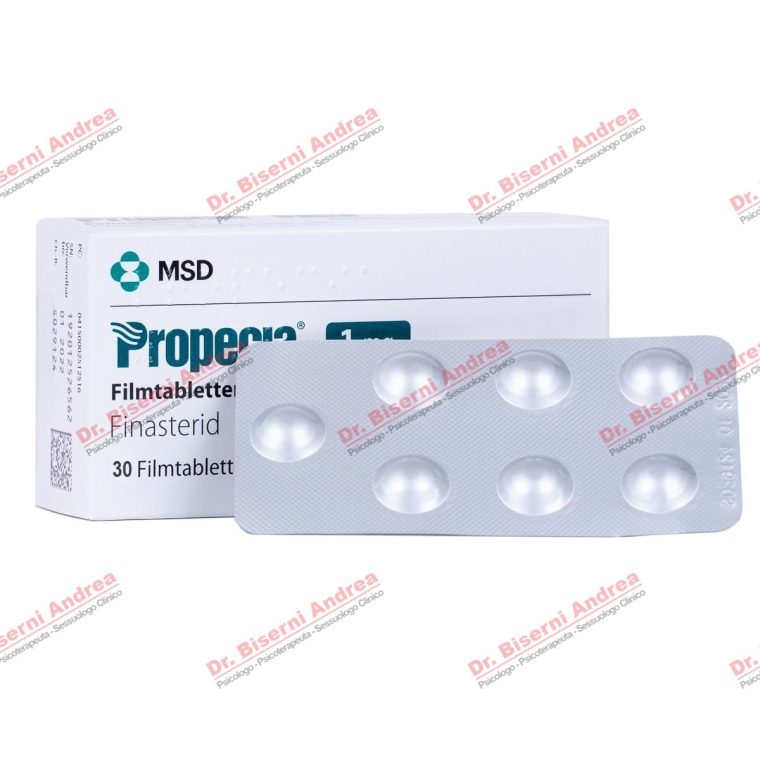
Against hair loss
One medicine, one kind of hair loss, and a decision that is more about sexual side effects than about hair. Finasteride, from about $28, treats male pattern hair loss by blocking the conversion of testosterone to dihydrotestosterone. It does not treat alopecia areata, the patchy autoimmune kind, and it does not treat hair loss caused by illness, thyroid disease, iron deficiency or a recent fever — all of which are commoner than people expect and none of which respond to a 5-alpha-reductase inhibitor.
Finasteride works slowly and conditionally. Visible change takes three to six months and the full effect a year; stopping it returns the scalp to where it would have been within about twelve months, which makes it a continuing commitment rather than a course. Its sexual side effects — reduced libido, erectile difficulty, reduced ejaculate — affect a small percentage, usually resolve on stopping, and are reported often enough that they should be mentioned before starting rather than discovered. It must not be handled by women who are or may become pregnant, including crushed or broken tablets.
The same molecule at five times the dose treats benign prostatic hyperplasia, which is why its effects overlap with the men’s health section. A man taking it for hair who later develops urinary symptoms is already partly treated; a man taking tamsulosin for those symptoms is on a drug with a different side-effect profile entirely — it spares erections and interferes with ejaculation instead.
Setting expectations before the first tablet
Success means the loss stops. Regrowth happens in a minority and is usually at the crown rather than the hairline, and it takes a year to assess properly. Anyone expecting a restored hairline will be disappointed by a drug doing exactly what it is supposed to do.
Topical minoxidil works by a different mechanism and is frequently combined with it, with better results than either alone. Dutasteride inhibits both enzyme subtypes and is more potent but is not licensed for hair loss in most countries. For patchy autoimmune loss the relevant treatments are dermatological and are not stocked here.
Measuring progress honestly
Standardised photographs at baseline and every three months, from the same angles in the same light, settle arguments that memory cannot. Hair loss is slow enough that perception is unreliable in both directions — people conclude nothing is happening when a photograph shows otherwise, and vice versa.
The sexual side effects, and how much of them is the drug
Finasteride carries roughly a one to two per cent excess rate of sexual side effects over placebo, most of them reversible, plus a small and genuinely contested risk of symptoms that persist after stopping. Those are the published figures, and they are worth holding alongside a second observation: in trials where men were told about the sexual side effects, the reported rate rose sharply compared with trials where they were not.
That does not mean the effect is imaginary. It means the question of how much is pharmacological and how much is anticipatory is a real one in an individual man, and it is answerable — erections that remain firm on waking and alone, but fail with a partner, are pointing away from the drug. That distinction is what the clinical sexology page addresses, and the first consultation at this studio is free. Where the difficulty is vascular rather than psychological, the tadalafil and sildenafil options are the relevant treatment and are compatible with continuing finasteride.
What else it changes, quietly
Finasteride halves PSA. That matters for prostate cancer screening, because a reading taken without that context can look reassuring while a trend is rising underneath it — the usual correction is to double the result. Tell any laboratory and any urologist that you take it, including if you stopped recently.
It can also cause breast tenderness or enlargement, and any breast lump or nipple discharge in a man taking it needs examining rather than watching. Mood change has been reported and is in the product information in several countries.
The shedding that happens before the improvement
Six to twelve weeks in, many men notice more hair in the shower rather than less. That is dormant follicles being pushed into a new growth cycle, the old hairs being released first, and it is a sign the drug is acting rather than failing. It settles by around month four. Stopping during it — which is common — abandons treatment at exactly the point where it is beginning to work. Photographs taken at baseline are worth more here than memory, because the shedding phase feels far more dramatic than it measures.
Medicines in Against hair loss