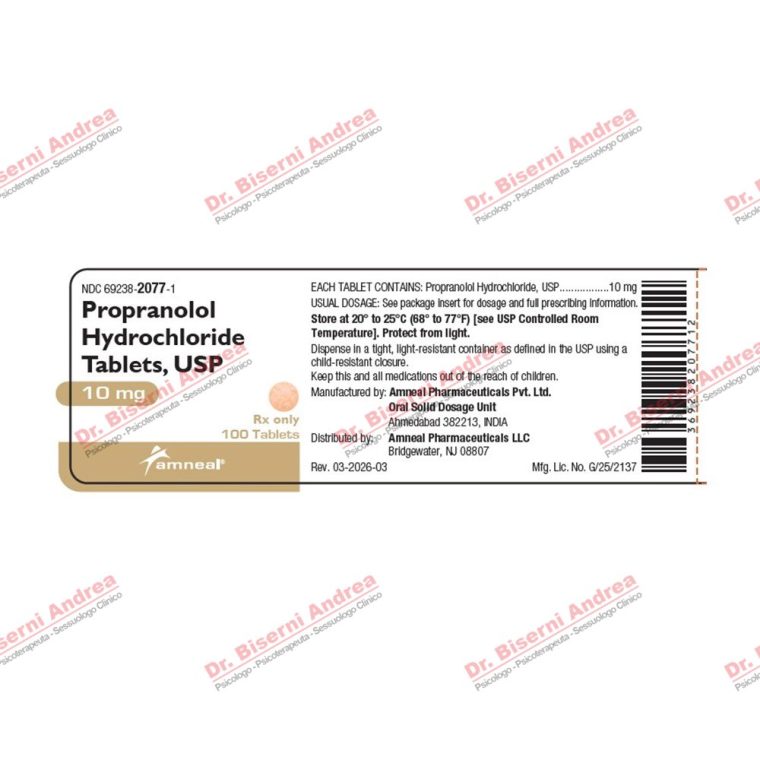
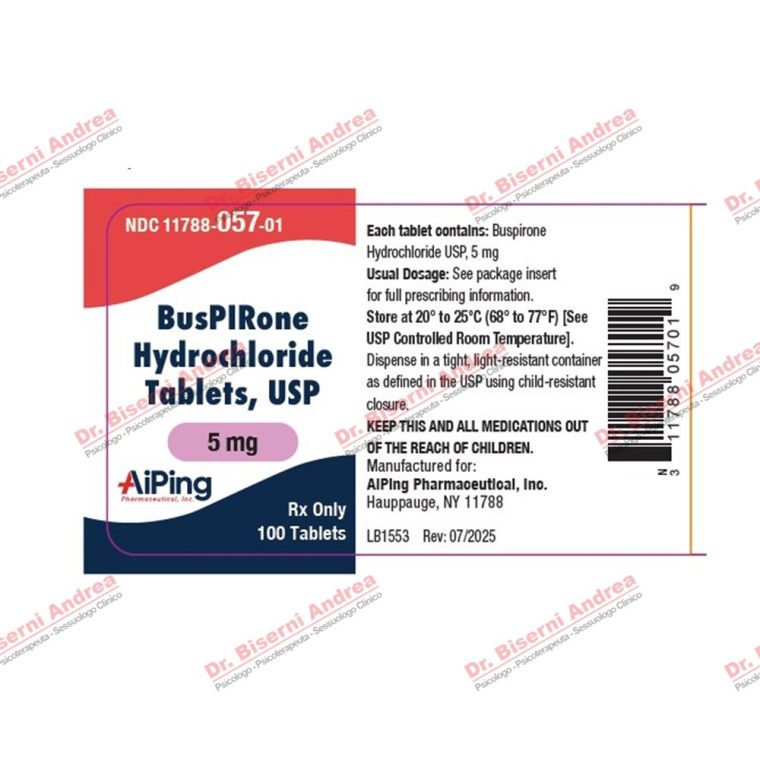
Anti-anxiety
Two medicines for two completely different kinds of anxiety, and the error that matters here is using one where the other belongs. Buspirone treats a background state — months of worry, tension and physical arousal — taken two or three times a day, with nothing to show for the first fortnight. Propranolol treats a moment: the racing heart, shaking hands and unsteady voice of a specific occasion, taken an hour beforehand and not otherwise.
Neither is a benzodiazepine, and that is deliberate. Benzodiazepines work in twenty minutes, which is exactly why they are the wrong answer for anxiety that lasts months: tolerance builds, dependence follows, and the dose that worked in week one does not work in month six. The two drugs here avoid that at the cost of either waiting two weeks or accepting that only the physical half of the problem is treated.
Buspirone is also used as an add-on against the sexual side effects of SSRIs, at the higher end of its dose range. The evidence is modest, and it sits third in the order of options behind reducing the SSRI dose and switching to bupropion — it is what gets tried when the antidepressant is working too well for mood to risk changing it.
Propranolol has one absolute exclusion that overrides everything else on this page: asthma. It is non-selective, it blocks the beta-2 receptors in the airways, and it can provoke severe bronchospasm even in someone whose asthma has been quiet for years.
Which of the two fits which problem
Generalised anxiety disorder, with persistent worry across most areas of life: buspirone or an SSRI such as escitalopram. Beta blockers have no useful evidence here, and a man who takes propranolol daily for background anxiety gets fatigue, cold hands and a recognised risk of erectile difficulty in exchange for very little.
Performance anxiety — a presentation, an examination, a first sexual encounter after a failure: propranolol, taken once, sixty minutes ahead. Panic disorder: neither of these, since propranolol does not prevent attacks and buspirone has no role; that is SSRI territory with psychological therapy alongside.
Sexual performance anxiety as a special case
A man who has lost an erection once and now watches himself for signs of failure is generating a sympathetic response that physically opposes erection — adrenaline constricts exactly the vessels that need to dilate. Blocking that response helps, and it is the clearest situational use of a beta blocker in this catalogue.
What it cannot do is stop the self-monitoring. A man with a calm body and the same watchful attention gets the same outcome, which is why this is the one part of the catalogue where the drug is explicitly the smaller half of the treatment. The work on the other half is described on the clinical sexology and approccio centrato sulla persona pages, and the first consultation at this studio costs nothing.
What to check before either drug
For propranolol: asthma or any history of it, chronic obstructive pulmonary disease, a resting pulse under fifty, heart block, untreated heart failure, insulin-treated diabetes where it masks the warning signs of a low sugar, and verapamil or diltiazem, which combined with a beta blocker can stop conduction. A daily dose taken for months must never be stopped abruptly.
For buspirone: grapefruit juice, clarithromycin, itraconazole, ketoconazole and ritonavir all raise its levels several-fold through CYP3A4, and significant liver or kidney impairment calls for a lower dose. MAOIs are contraindicated with both, with fourteen days clear.
Why the two-week wait is the main reason buspirone fails
Anyone who has taken a benzodiazepine knows what relief feels like and knows when it arrives. Buspirone offers nothing comparable, and the first fortnight is the whole test of whether treatment continues. Prescribers who say so in advance get better adherence than prescribers who do not, and that accounts for most of the difference between the drug working and the drug being abandoned.
Where medication is not the treatment
Anxiety that has a cause responds to the cause. Worry that started with a job, a diagnosis, a bereavement or a relationship in trouble is not a serotonin deficiency, and the evidence for psychological therapy in anxiety disorders is at least as strong as the evidence for any drug — with effects that outlast the prescription, which no medicine in this section can claim. Where both are used together the results are better than either alone, and that combination is the standard recommendation rather than a compromise.
Medicines in Anti-anxiety