
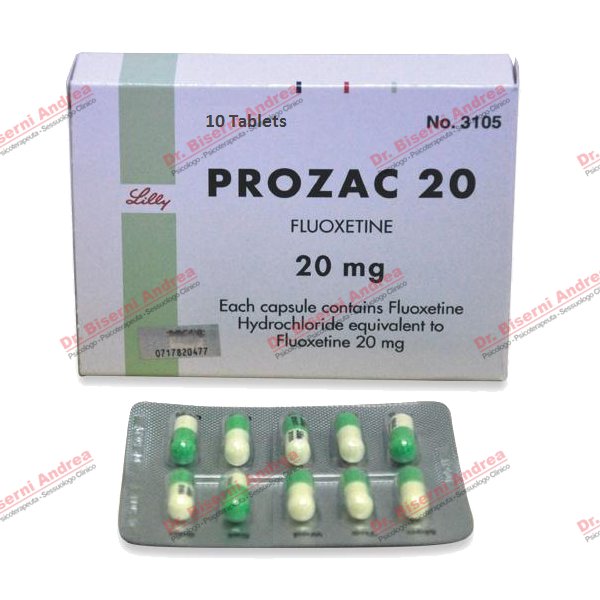
$31.09
Prozac generic (fluoxetine): the first four weeks, and the sexual side effects nobody raises
- fluoxetine
- Capsule
- 20mg, 40mg, 10mg, 60mg
- Prescription only
Prozac generic is fluoxetine, and most courses that fail do so in the first fortnight — not because the drug does not work, but because the order of events is counterintuitive. Side effects arrive first. Benefit arrives weeks later. Someone who starts fluoxetine and feels nauseous, restless and worse-sleeping by day four, with no improvement in mood, concludes reasonably that it is not helping. What has actually happened is the normal opening sequence of an SSRI.
The timeline, stated plainly
Days one to fourteen: nausea, headache, disturbed sleep, sometimes increased anxiety or agitation. These are dose-related and settle in most people. Weeks two to four: physical symptoms begin to improve — sleep, appetite, energy — often before mood does. Weeks four to six: mood and interest change. A fair assessment of whether a dose is working takes six weeks at an adequate dose, not two.
Starting dose is usually 20 mg daily, taken in the morning because it tends to be activating rather than sedating. It can be increased after several weeks if response is partial. Doses up to 60 mg are used in obsessive-compulsive disorder and bulimia, where the evidence supports higher dosing than in depression.
Prices by strength
| Pack | 10 mg | 20 mg | 40 mg | 60 mg |
|---|---|---|---|---|
| 20 capsules | — | — | $37.63 | $42.59 |
| 30 capsules | — | $31.09 | $48.68 | $56.16 |
| 60 capsules | $37.97 | $45.90 | $80.31 | $94.32 |
| 90 capsules | $43.08 | $62.97 | $105.88 | $127.68 |
| 120 capsules | $54.03 | $79.76 | $137.58 | $160.60 |
| 180 capsules | $74.29 | $114.85 | $191.70 | $231.86 |
| 270 capsules | $104.21 | $162.90 | $267.50 | $324.03 |
| 360 capsules | $134.22 | $217.73 | $346.85 | $424.75 |
Treatment for a first episode of depression usually continues for at least six months after recovery, so a three-month pack is the realistic unit rather than a month's trial.
The sexual side effects, which get raised too rarely
Delayed or absent orgasm, reduced libido and erectile difficulty affect a substantial minority on SSRIs — the figures vary widely by how the question is asked, and they are consistently higher when researchers ask directly than when they wait for spontaneous reports. That gap is the clinically important finding: people do not volunteer this, and prescribers frequently do not ask.
It matters because it is one of the main reasons people stop antidepressants that were otherwise working, often without telling anyone why. And it is manageable: the effect is dose-related, so a reduction sometimes resolves it; switching to a different agent helps in some cases, and bupropion is the usual destination because it causes sexual dysfunction at roughly the rate of placebo; adding buspirone has modest evidence where the current drug is working too well for mood to risk changing it; and adding a PDE5 inhibitor has reasonable evidence for SSRI-associated erectile difficulty specifically — the men's health range covers those.
What is not a good answer is stopping silently. Depression itself reduces libido and sexual function, often more than the medication does, and untangling which is which usually requires talking to someone rather than guessing. That untangling is exactly what clinical sexology and psychotherapy are for, and the first consultation at this studio is free and carries no obligation.
Why fluoxetine specifically
Its half-life is far longer than other SSRIs — days rather than hours, with an active metabolite lasting longer still. Two consequences follow. Missing a dose matters less than with short-acting agents, and discontinuation symptoms are much milder, which is why it is often the SSRI chosen when adherence is uncertain. Against that, it takes weeks to clear, so any switch to another serotonergic drug needs a long washout.
It is licensed in adolescents for depression, which most SSRIs are not, and it is the best-evidenced option in that age group.
Safety and interactions
Monoamine oxidase inhibitors are absolutely contraindicated, with a five-week gap required after stopping fluoxetine because of its long half-life. Other serotonergic drugs — tramadol, triptans, lithium, St John's wort, dapoxetine — carry serotonin syndrome risk. Fluoxetine inhibits CYP2D6 strongly, raising levels of some beta blockers, antipsychotics and tamoxifen, where it can reduce conversion to the active metabolite. NSAIDs and anticoagulants add bleeding risk.
The warning about increased suicidal thinking in people under twenty-five during the first weeks of treatment is real and is a reason for close monitoring early rather than a reason to withhold treatment. Any new agitation, worsening mood or thoughts of self-harm in the first month warrants same-week contact with the prescriber.
Do not stop abruptly after long-term use even though fluoxetine is forgiving — taper with advice. And expect the decision about how long to continue to be about relapse prevention rather than about current mood.
Stopping, and how to do it without a rebound
Fluoxetine is the most forgiving SSRI to stop because its half-life and that of its active metabolite are measured in days, which means levels fall gradually on their own. Discontinuation symptoms — dizziness, electric-shock sensations, irritability, flu-like feelings — are consequently milder than with short-acting agents.
That does not make abrupt cessation a good idea. The usual approach is a taper over several weeks, longer after years of treatment, and the taper exists partly to distinguish discontinuation symptoms from returning depression. Those are not the same thing and treating one as the other sends people in the wrong direction.
The decision about when to stop belongs to relapse risk rather than to current mood. A first episode is typically treated for six to twelve months after recovery; recurrent depression often warrants longer, sometimes indefinitely.
What to watch for in the first month
Increased anxiety or agitation in the first week or two is common and usually transient, and it is also the period in which the warning about increased suicidal thinking in people under twenty-five applies. Those two facts sit together uncomfortably and the practical response is the same: close contact in the first month, with someone who knows what to look for.
Specific things to report the same week rather than at the next appointment: new or worsening agitation, marked sleep disturbance, any thought of self-harm, and a sudden shift into unusually elevated mood or energy, which can indicate an underlying bipolar disorder that an antidepressant has unmasked.
Interactions worth knowing before starting
Fluoxetine is a strong CYP2D6 inhibitor, which raises levels of a long list of other drugs: some beta blockers, some antipsychotics, tricyclic antidepressants, and — importantly for anyone taking it alongside breast-cancer treatment — it reduces the conversion of tamoxifen to its active form.
Serotonergic combinations carry serotonin syndrome risk: tramadol, triptans, lithium, St John’s wort, and dapoxetine. Monoamine oxidase inhibitors are absolutely contraindicated, with a five-week gap required after stopping fluoxetine because of its long half-life. NSAIDs and anticoagulants together with an SSRI increase bleeding risk.
Storage
Capsules in their blister or bottle at room temperature, away from humidity. Shelf life is typically three years. Treatment runs for months at minimum, so ordering ahead rather than on the last capsule avoids a gap — which with this drug is less consequential than with most, but is still a gap.
If it is not working at six weeks
The options are a dose increase, a switch to a different SSRI, a switch to a different class, or the addition of psychological therapy — which in moderate depression performs comparably to medication and in combination does better than either.
What is not an option is concluding that nothing works after one drug at one dose for six weeks. Response to the first antidepressant tried is roughly fifty per cent, and most people who do not respond to the first respond to the second.
How long it takes, and what to prepare
Before starting the order, have the strength in front of you: Prozac Generic is stocked as 20mg, 40mg, 10mg, 60mg, and the prescription has to name one of them, together with the quantity, your name, the prescriber’s details and a readable date. Faded photographs and handwritten strengths are what hold orders up.
Checks clear inside one working day as a rule, and orders are released in the sequence they arrive rather than by what they are worth. Prozac Generic travels on the standard tracked service like everything else in antidepressants. When a prescription needs clarifying, the pharmacy contacts you the same day it is spotted.
Questions
How long until it works?
Four to six weeks at an adequate dose. Physical symptoms often improve before mood does.
Will I have to take it forever?
Usually not. A first episode is typically treated for six to twelve months after recovery; recurrent depression may warrant longer.
Can I drink on it?
Moderately, though alcohol worsens depression independently and compounds any sedation.
What if the sexual side effects are the problem?
Say so to the prescriber rather than stopping. Dose reduction, a switch, or adding treatment for the specific difficulty are all options.
The label these figures come from
Dosing, onset timelines, the suicidality warning and interaction data follow the FDA prescribing information for fluoxetine and the depression management guidance published by NICE.
Related medicines
Where the facts about Prozac Generic come from
Prozac Generic: the strengths, the dosing, what the capsule form changes, the contraindications and the interaction warnings set out above are the ones in the approved labelling for fluoxetine — the current FDA label in DailyMed — read against the European product information where this molecule is licensed in the EU. Where a figure here differs from the one in your own pack insert, the insert for the pack you hold is the document to follow.
Prozac Generic touches mood, sleep and the sexual side effects that decide whether an antidepressant is kept, and that part of the page was read before publication by Dr. Andrea Biserni, psychologist, psychotherapist and clinical sexologist, Ordine degli Psicologi della Toscana n. 3572 sez. A (verify in the national register). The milligrams were not: he is not a prescriber, and the dosing and safety wording for fluoxetine stays as the regulator wrote it.
How ordering works
Packs of Prozac Generic run from $31.09 to $424.75. The figure covers the medicine, the pharmacist check and tracked delivery; customs charges raised at the destination are not. Dispatch and tracking are set out under shipping and delivery, what can and cannot come back under returns and refunds, and the contract itself in the terms of sale.
Prices quoted for Prozac Generic are indicative; the amount charged is confirmed in writing before any payment is taken. As a prescription-only medicine it is never dispatched without a valid prescription from a licensed prescriber — send it through the prescription service and a pharmacist checks it against the strength and quantity before release. Nothing here replaces advice from your own doctor or pharmacist about fluoxetine, and the studio does not diagnose or prescribe by e-mail.